
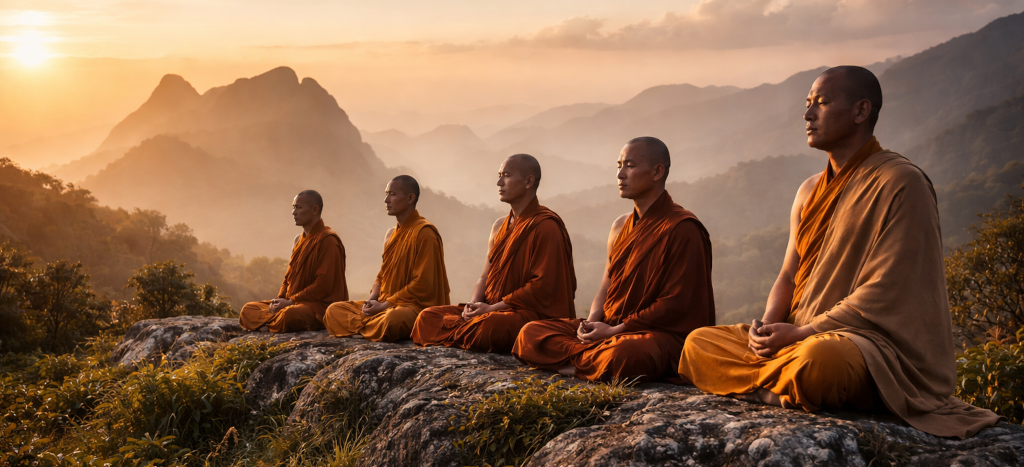
In Eastern religions like Buddhism, there’s a concept called abhiññā. It refers to six supernatural skills that can appear in some meditators after reaching the Fourth Jhāna. Through meditation, practitioners aim for enlightenment, and along the way, extraordinary psychic abilities may manifest. What kinds of abilities? For example, VEREVIO has compiled a list of psychic abilities discovered in people. You can explore it to learn more about each one.
For these powers to emerge, Tibetan Buddhist monks follow specific meditation practices. They begin by training the mind to focus on a single object, the breath, or a mantra for extended periods, building deep mental stability. This practice is called Samatha. Next, they practice Vipassana, observing thoughts, emotions, and bodily sensations without attachment, which improves awareness and control over the mind.
After years of practice, some monks reach profound meditative states called Jhānas, where heightened mental clarity may activate rare abilities. Certain Tibetan techniques also involve visualizing energy flows or subtle body channels, which are believed to enhance psychic potential.
Scientific Study of Buddhist Monks’ Brains During Meditation
Zoran Josipovic, a neuroscientist based in New York, has spent over a decade studying the brain states of monks during meditation using neuroimaging techniques.
His research shows that the neural networks of experienced meditators undergo measurable changes.
He explains that the brain operates through two major systems: the extrinsic (external) network and the intrinsic, or default mode (internal) network, which is responsible for self-referential thought. The default mode network, in particular, remains relatively understudied.
These networks are typically anti-correlated — when one becomes more active, the other decreases, much like a swing shifting from one side to the other.
However, his findings suggest that some Buddhist monks and highly experienced meditators can activate both networks simultaneously during meditation — effectively raising both sides of the “swing” at once.
Something is happening in their brains that scientists still don’t fully understand.
All the more, psychic abilities aren’t the point of Buddhism, Siddhis or psychic powers may exist, especially among very advanced meditators, but they are rare, not guaranteed, and often secretive.
On Reddit, users say that while they have not personally witnessed such abilities, their teachers reportedly have. According to tradition, these abilities are not meant to be displayed openly — revealing them is considered appropriate only for very serious reasons.
Meditation and Psychic Abilities Aren’t Specifically Buddhist
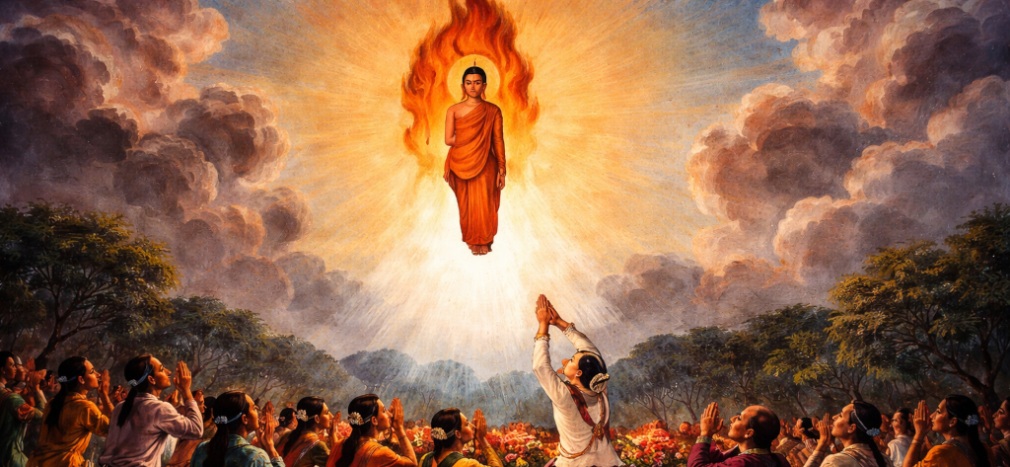
We are talking monks, however, meditation isn’t “Buddhist” only, and similar psychic abilities appear in other religious traditions.
For example,
Buddhism: Advanced meditators like Maha Moggallana were said to foresee events, including future happenings in the world.
Christianity: Prophets in the Bible, like Isaiah or Daniel, received visions of future events.
Hinduism: Yogis practicing the Six Yogas of Naropa could develop clairvoyance to see distant or future events.
It seems that meditation unites them in some sense. So we decided to look at the process of meditation below.
1. How preparation looks like for beginners
- Place: quiet and calm, no distractions
- Pose: sit on a chair or floor, back straight, shoulders relaxed
- Eyes: closed or half-closed
- Breathing: natural, don’t force it
2. Start with breathing (calm practice)
Sit and watch your breath. Feel the air going in and out.
Goal: focus on one thing.
Time: start with 5–10 minutes, slowly increase to 20–30 minutes.
Tip: when your mind wanders, return to the breath.
3. Next step: observe thoughts
After you can sit calmly for 10–15 minutes:
Notice thoughts, emotions, body feelings.
Don’t change anything — just observe.
Goal: become more aware of your reactions.
Time: 5–15 minutes.
4. Repetition
Practice awareness in simple things:
- Eating: notice taste and smell
- Walking: feel your steps
- Talking: notice emotions and breathing
5. Bring intention
Start with a simple thought:
“I want to be calm and kind to myself and others.”
6. Simple plan
- Days 1–3: breathing, 5 min
- Days 4–7: breathing + body, 10 min
- Week 2: breathing + thoughts, 15–20 min
- Week 3: add daily life practice, 20–30 min
Tip: 10 minutes every day is better than 1 hour once a week. Skipping days means your mind “forgets” the training. And 1 hour at once can feel long and stressful, making it harder to concentrate or enjoy.
How Long Does it Take to Become an Experienced Practitioner of Meditation?
The truth is, there’s no fixed timeline. How quickly you progress depends on your dedication, the type of meditation you practice, the tradition you follow, and your own mind and body.
A general progression often looks like this:
- Novice Stage (1–5 years)
- Intermediate Stage (5–10 years)
- Advanced Stage (10–20+ years)
- Lifetime Learning (Some Tibetan masters have 50+ years of practice)
Will you develop psychic abilities? Who knows. But today, there are some specific practices, such as remote viewing, telepathy, and energy sensing, that focus directly on developing these kinds of skills.