
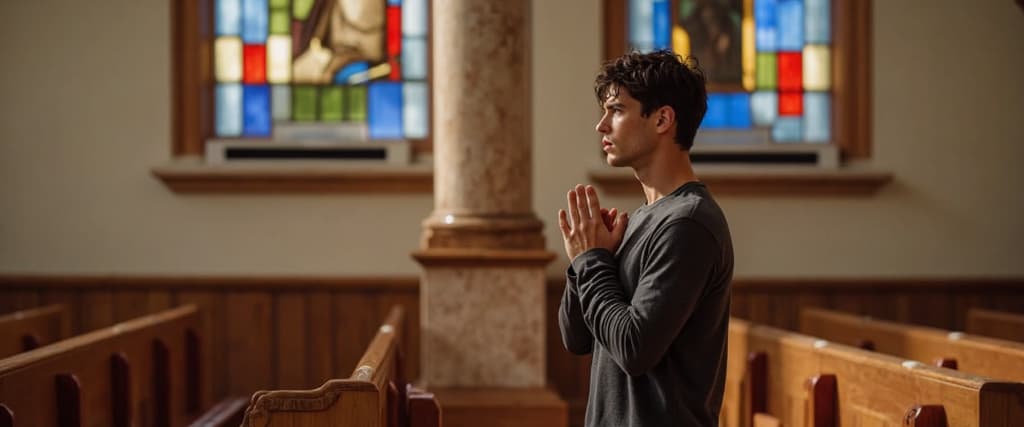
In recent decades, Western societies have witnessed a persistent decline in religious affiliation and church attendance. Millennials in particular are often characterized by their “spiritual but not religious” outlook, embracing secular values and distancing themselves from organized faith. Yet emerging evidence suggests that the youngest adult generation — Generation Z (Zoomers) — may be bucking this long-term trend. Reports from Europe and the United States point to rising levels of religious commitment among Gen Z.
Evidence of Renewed Religious Commitment Among Gen Z
A recent report highlights a remarkable turnaround for young Christians in Europe, particularly within the Catholic Church. In France, baptisms among 18- to 25-year-olds have more than quadrupled in the past four years. In the Easter season of 2025, the Church recorded 17,800 baptisms, including a 45 % rise in adult baptisms compared with the previous year. Such statistics contrast with historical perceptions of widespread secularization in Western Europe, where weekly Mass attendance had fallen to as little as 2–5 % of the population.
Similar trends appear in other European countries. In Belgium, teenage and adult baptisms nearly tripled over the past decade. In Ireland’s largest diocese, the number of adult baptisms around Easter doubled in a single year, many involving young adults. In London’s Westminster Archdiocese, 2025 saw the highest number of adult baptisms since 2018.
Collectively, these data suggest a substantial re-engagement with institutional faith by a younger generation — a phenomenon labeled the “Quiet Revival”.
In the United States, decades of decline in Christian affiliation — from approximately 90 % of adults in the early 1990s to about 60 % by 2022 — appeared irreversible. The percentage of Americans who disaffiliate and identify as “nones” rose accordingly. Recently, though, that growth has stalled, hovering around 30 %. This plateau coincides with Gen Z reaching adulthood. Several studies, including one from Harvard University, found increasing numbers of Gen Z Americans now identify as Christian — notably, as Catholic. Especially among young men, there is a marked resurgence in religious self-identification.
Why Gen Z? Explaining the Shift
Search for Meaning and Certainty
One common thread across surveys and reports is Gen Z’s craving for meaning in an uncertain world. After years defined by global political instability, economic anxiety, pandemic isolation, and social fragmentation, many young adults express a desire for something stable and transcendent.
Institutional religions like Christianity — with their clearly defined moral frameworks, centuries-old traditions, and rituals — offer a sense of order and purpose that appeals to those seeking clarity. For some young men, the structure and discipline of religious life stand in contrast to what they perceive as “toxic masculinity” on social media. In this context, religious doctrine becomes attractive not only as faith but as a guide for identity and moral behavior.
Community, Belonging, and Social Connection
Particularly in the years following the COVID-19 pandemic, many Gen Zers report loneliness, social isolation, and an erosion of traditional community bonds. For them, religious communities — whether campus ministries, local churches, or faith-based youth groups — provide a ready-made network of belonging. In university settings, student religious organizations have seen significant increases in membership, as young adults look to reconnect socially, culturally, and spiritually.
This sense of community and shared values appears especially attractive to those who feel disconnected from mainstream secular institutions or disillusioned by consumerist culture.
Rejection of the “Spiritual Salad Bar”
Earlier recent generations — particularly millennials — are sometimes stereotyped as engaging in eclectic “spiritual salad bar” hobbies: meditating, doing yoga, reading self-help books, or mixing bits of different traditions to find personal comfort. For many Gen Zers, that approach now feels insufficient. They seek something deeper, more enduring — not borrowed spirituality but established religious traditions that provide a coherent worldview and long-term grounding.
Religious scholars point out that many Zoomers find hybrid spiritual lifestyles “too shallow”. The renewed interest in defined doctrines and institutional churches suggests a shift from individualistic spiritual fluidity toward structured tradition.
Digital Religion and Religious Influencers

One of the most striking features of this revival is how much of it is happening online. The Catholic Church and other faith institutions are discovering the power of social media. Clergy and laypeople alike — priests, nuns, and everyday believers — are carving out a space in digital culture.
Figures like a 29-year-old nun with hundreds of thousands of followers on Instagram and TikTok have turned faith into shareable, relatable, and modern content. Her sermons, moral advice, and daily prayers are interwoven with memes, life hacks, and informal discussions of scripture — giving faith a fresh, youthful voice. Her digital presence challenges stereotypes of religion as old-fashioned or outdated.
The Vatican itself has responded: in 2025, the Pope met with over a thousand religious content creators, praising their efforts to “weave new nets” online. This embrace of digital evangelism acknowledges that for Gen Z, faith often exists at the intersection of algorithms, identity, and community — not just pews and pulpits.
These developments matter because they democratize religious access. Young people who once felt alienated from traditional churches may now explore faith through content they control or relate to — making religion more accessible and personal than ever.
Generational Comparison: What Changed
In previous decades, many left institutional faith for a mix of skepticism, moral disagreement with religious institutions, or a desire for individualized spirituality. The 1990s and 2000s saw a sharp rise in religious “nones” — individuals identifying as atheist, agnostic, or spiritual but unaffiliated.
Today, Gen Z appears more willing to reclaim institutional religion — but on their own terms. Instead of returning quietly to Sunday worship, many are exploring faith online, experimenting with baptism as adults, and seeking communities that reflect their values.
Accordingly, Gen Z’s version of faith differs from prior generations: it combines traditional religious structure with modern identity, community, and digital engagement.
Are Zoomers More Religious — Or Just Practicing Differently?
Based on the evidence, the answer is both yes and no.
Yes — in practice:
- Baptism rates among young adults are rising in multiple Western countries.
- Self-reported religious affiliation among Gen Z in the U.S. is increasing.
- Participation in religious student groups and faith-based social media is growing.
No — in form:
- Gen Z doesn’t necessarily conform to traditional expectations of faith (regular church attendance, generational inheritance).
- Religion for many Zoomers is fluid, personal, and often mediated through digital culture.
- Their faith tends to prioritize community, identity, and meaning rather than institutional doctrine or ritual discipline.
In other words, Gen Z may not practice religion exactly as older generations did — but they do practice religion, on their own terms.